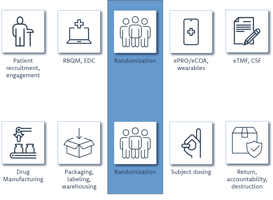

At the SCOPE 2026 Summit in Orlando, Florida, Paul Hughesdelivered a presentation that stood out...
How Life-Sciences Teams Should Set Approval Thresholds for AI-Assisted Clinical Operations Workflows
Life-sciences teams do not need another abstract conversation about whether AI belongs in clinical operations. That question is already settled by budget pressure, speed expectations, and workflow complexity. The real question is which actions AI can perform on its own, which outputs need review, and which decisions should never leave human hands.
Getting that question wrong in either direction is expensive. Teams that block AI across the board lose the throughput advantage it offers. Teams that adopt it without clear approval design create quality, inspection, and execution risk that shows up at the worst possible moment — mid-study, pre-inspection, or when something goes wrong.
The practical solution is not a policy document. It is a working approval model built around workflow risk.
The Governance Mistake Most Teams Make
Most organizations frame AI adoption as a binary choice: approve it broadly or block it until something better can be evaluated. Neither position holds up in clinical operations.
The problem is that clinical operations workflows are not a single category of risk. Generating a meeting summary and dispositioning a CAPA record are not the same class of action. Drafting a site communication and approving a protocol change are not equivalent. Treating them as if they require the same level of human oversight — in either direction — creates friction where efficiency was the point, or creates exposure where control was essential.
The operating model that works is classification. When teams define which workflow actions sit in which control lane, they can allow low-risk work to accelerate while keeping compliance-significant decisions exactly where they belong: with humans.
The Three Control Lanes for AI-Assisted Clinical Operations
A practical approval model for clinical operations uses three working lanes:
Lane 1: Autonomous / Low-Risk
These are workflow actions where AI can execute without human review before the output takes effect. The defining characteristics: the action is reversible, it does not touch GxP-regulated content or quality records, and the consequence of an error is low and correctable.
Examples include: transcription cleanup and meeting summary formatting, metadata tagging and document routing, task reminders and scheduling support, non-binding information extraction from study documents, and background literature or reference compilation. None of these actions affect study execution, subject safety, or inspection posture in a material way. Requiring human sign-off on each one creates process friction without adding quality value.
Lane 2: Review-Required / Medium-Risk
These are workflow actions where AI prepares an output, but a qualified human reviews and approves before the action goes forward. The defining characteristic is that the output influences decisions or communications that affect study operations, but the human reviewer retains judgment and authority over the final action.
Examples include: draft site communications and sponsor update emails, issue prioritization and deviation triage recommendations, query reconciliation support, change-control preparation and impact summaries, site follow-up suggestions, and operational decision-support outputs that inform — but do not make — study management decisions.
The key distinction here is that AI is a force multiplier for the reviewer, not a replacement. A well-drafted communication that a qualified person reviews and approves is faster than starting from scratch, without creating uncontrolled output.
Lane 3: Human-Only / High-Risk
These are workflow actions that must remain in human hands. No AI output — regardless of quality — should substitute for direct human judgment and accountability. The defining characteristics: the action is irreversible or high-consequence, it directly affects subject safety, creates or closes a regulated quality record, or carries significant GxP or inspection exposure.
Examples include: final quality approvals and CAPA closure, protocol-significant decisions, regulated system or record signoff, patient-safety-impacting clinical judgment, compliance-significant disposition decisions, and any action that constitutes a formal declaration under a regulated quality framework.
This lane is not about distrust of AI capability. It is about the structural accountability that regulated operations require. Some decisions need a qualified person's name on them because the regulatory and quality framework demands it — and that is a design feature, not a limitation.
The Four Tests That Set the Threshold
Classification becomes practical when leaders apply a consistent set of questions to each workflow action. Four tests cover most cases:
1. What is the consequence if the output is wrong? If an error in the AI output could affect trial data integrity, subject safety, site operations, or regulatory standing, the action belongs in a higher-control lane. If an error is easily caught and corrected without downstream harm, autonomous or review-required handling may be appropriate.
2. Does the action touch GxP-regulated content, quality records, or validated-system behavior? This is often the clearest signal. Any output that writes to, modifies, or triggers action on a GxP-regulated record — study data, protocol documentation, quality records, validated system inputs — requires explicit human review or human execution.
3. Is the result reversible without operational or compliance harm? Reversibility matters both practically and from an inspection standpoint. If an AI-assisted action produces an error and the team can correct it before it affects study execution or creates a record, the risk profile is meaningfully different from an action that immediately touches regulated documentation or creates a formal record that cannot be retracted cleanly.
4. Is the AI preparing a recommendation, or executing a decision? A draft is not a sent communication. A triage suggestion is not a disposition. Recommendation-mode outputs move work forward and preserve human judgment at the point of consequence. When AI crosses from preparing to executing — especially on compliance-significant decisions — human approval must be the gate.
Teams that apply these four tests consistently can build a defensible workflow classification table without a months-long governance project. Most recurring clinical-operations workflows sort cleanly across the three lanes when scored against these criteria.
Why Approval Thresholds Accelerate Adoption Instead of Slowing It Down
A common concern is that building a formal approval model will slow down AI implementation or create bureaucratic overhead. The experience in practice is the opposite.
When teams have clear rules about which work can flow autonomously, clinical operations staff can actually use AI tools without constantly checking whether a particular workflow requires sign-off. When the lanes are undefined, every user defaults to one of two bad answers: over-review everything (slow) or make individual judgment calls case by case (inconsistent and ungoverned).
Pre-approved autonomous workflows remove friction where friction adds no value. Clear review-required workflows give qualified reviewers a defined role that makes their time count. Human-only rules protect quality and inspection posture where protection is genuinely needed.
The teams that struggle with AI adoption in clinical operations are usually not struggling because AI is technically difficult. They are struggling because no one has done the workflow-classification work, so every use case feels like a one-off governance debate. An approval framework resolves that.
It also simplifies the conversation with quality teams, compliance leaders, and inspection readiness functions. "We have a documented risk classification for AI-assisted workflows with defined approval thresholds, reviewer roles, and escalation rules" is a materially better posture than "we evaluate each workflow as it comes up."
A Practical First Step for Sponsors and CROs
Starting with a platform selection or vendor evaluation is the wrong first step. Before any system question, teams need a workflow map.
The exercise is straightforward: list 5 to 10 recurring clinical-operations workflows that are candidates for AI assistance. For each one, work through the four tests above and assign it to one of the three control lanes. Then document: Who is the designated reviewer for Lane 2 workflows? What constitutes the Lane 3 boundary in your specific environment? What is the escalation path when a workflow action does not sort cleanly?
The output is a lightweight approval matrix — one table that covers the workflows your team actually runs. It does not need to be exhaustive on day one. A working classification for the highest-frequency workflows creates the structure for expanding coverage as AI usage grows.
This also gives quality and operations leadership a shared artifact they can pressure-test together before deployment, which tends to shorten — not extend — the internal approval cycle for AI tools.
Conclusion
The teams that benefit most from AI in clinical operations will not be the ones that automate the most. They will be the ones that classify risk clearly, preserve human judgment where it matters, and let low-risk workflow support run with confidence.
The approval model is not a barrier to AI adoption. It is the operational architecture that makes adoption sustainable, defensible, and fast.
Map your current clinical operations workflows into autonomous, review-required, and human-only lanes — then pressure-test whether your approval thresholds are based on real study risk or just habit. BC Consulting helps life-sciences teams design the governance model before AI adoption outruns control.